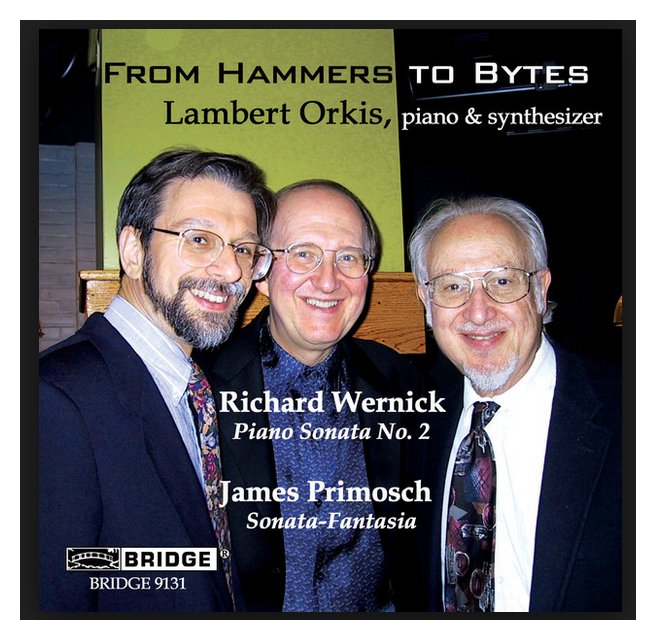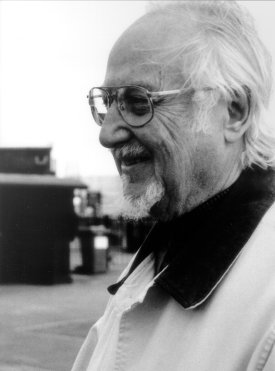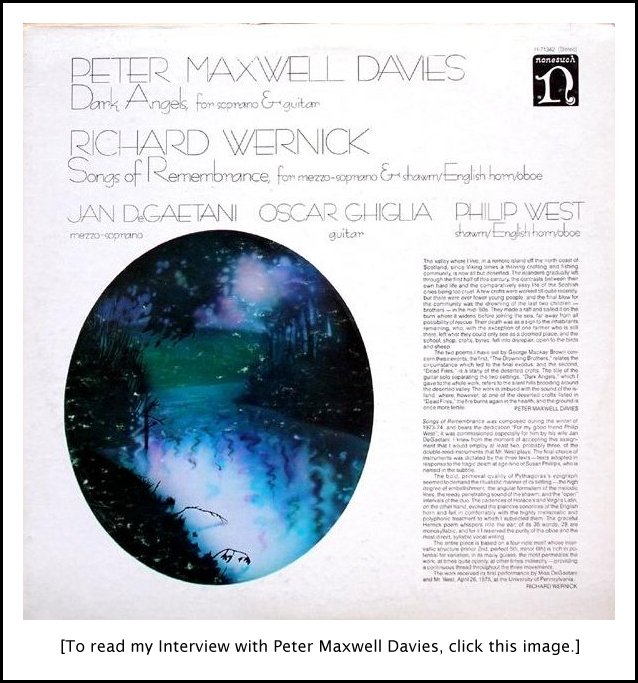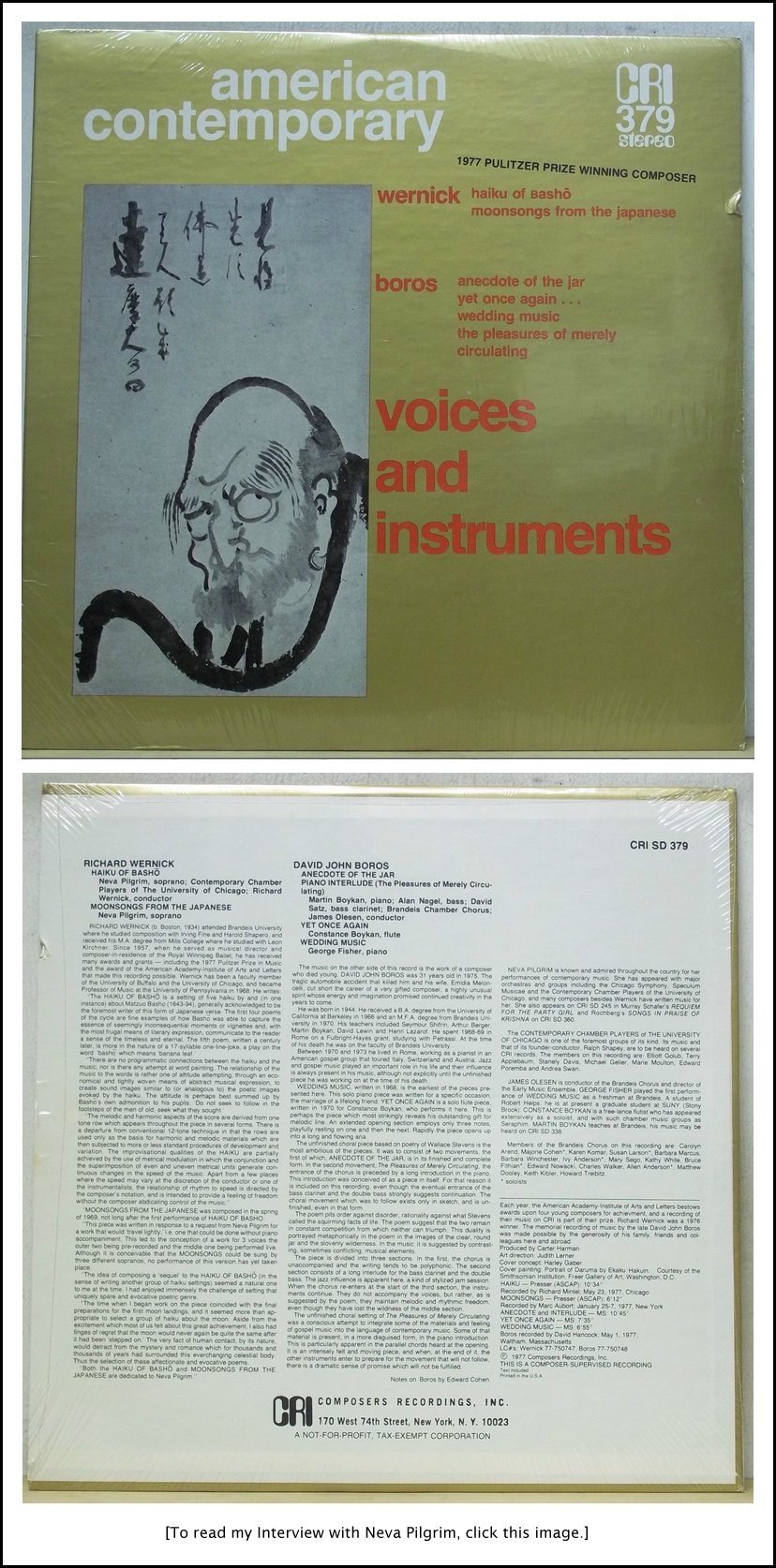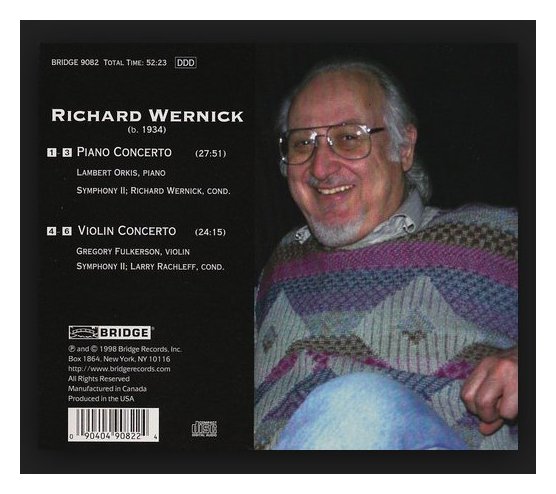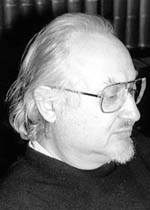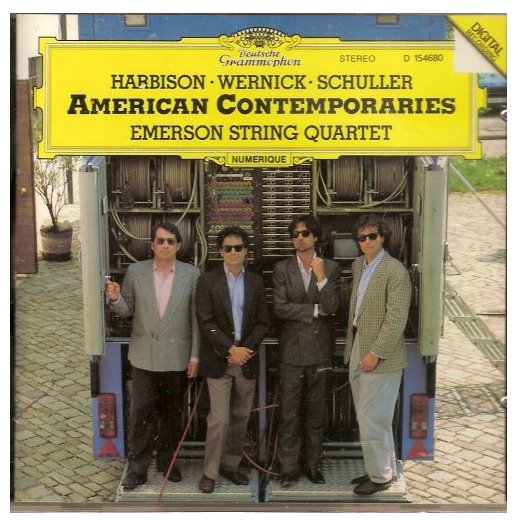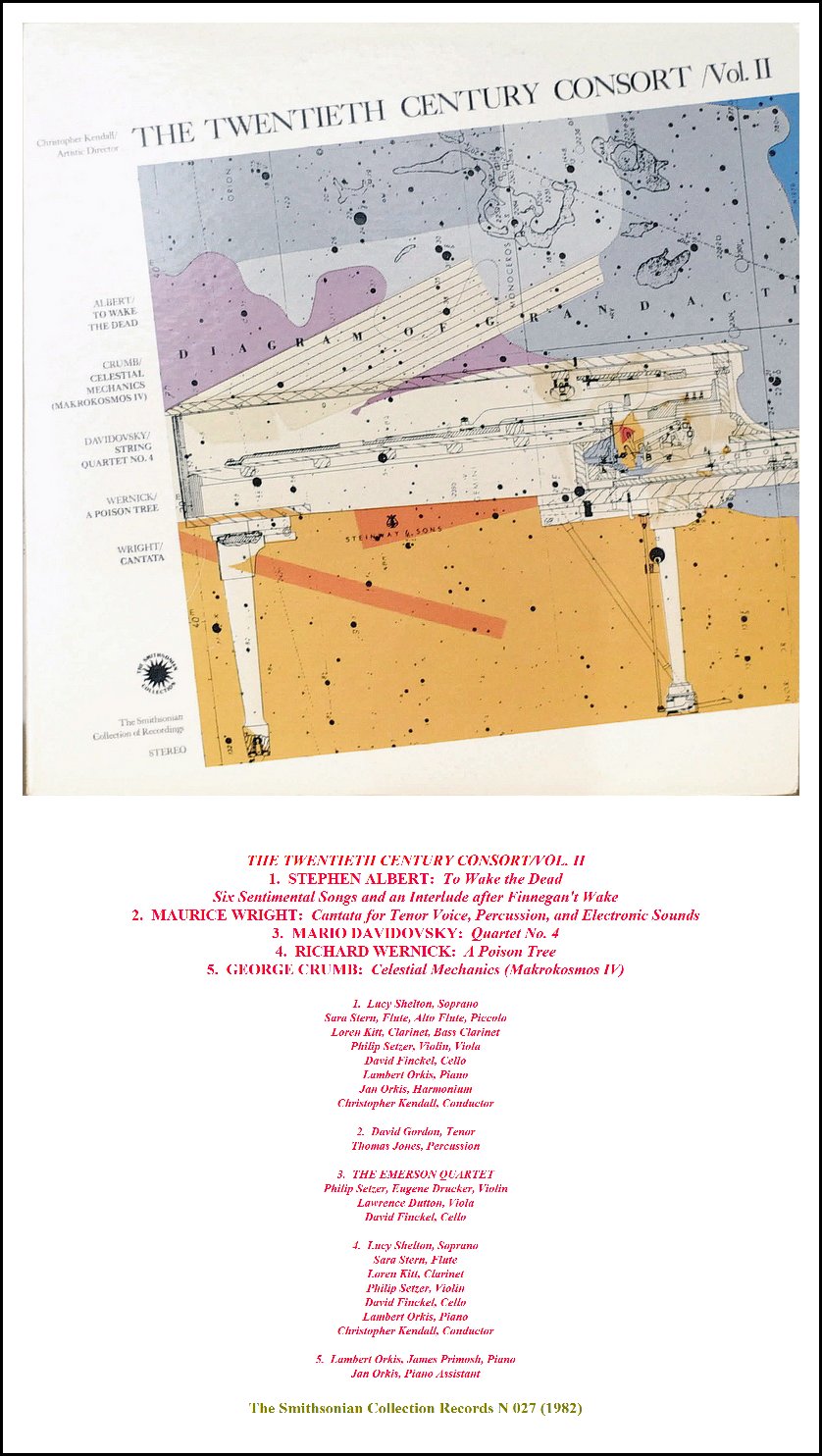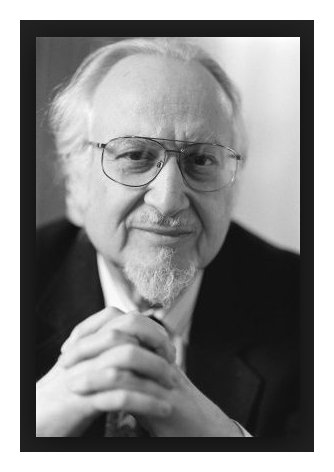
Born 1934 in Boston, Massachusetts, Richard Wernick’s many awards include the 1977 Pulitzer Prize in Music, and three Kennedy Center Friedheim Awards (First Prizes in 1986 and 1991, Second Prize in 1992) — the only two-time First Prize recipient. He received the Alfred I. Dupont Award from the Delaware Symphony Orchestra in 2000, and has been honored by awards from the Ford Foundation, Guggenheim Foundation, National Institute of Arts and Letters, and the National Endowment for the Arts. In 2006, he received the Composer of the Year Award from the Classical Recording Foundation, resulting in the funding for an all-Wernick CD on the Bridge label (released in 2008 and shown below) featuring performances by David Starobin, William Purvis, the Juilliard String Quartet and the Colorado Quartet.
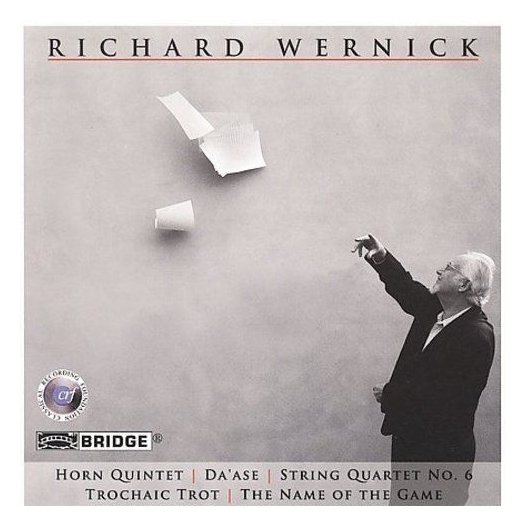
Mr. Wernick became renowned as a teacher during his tenure at the University of Pennsylvania, where he taught from 1968 until his retirement in 1996, and was Magnin Professor of Humanities. He has composed numerous solo, chamber, and orchestral works, vocal, choral and band compositions, as well as a large body of music for theater, films, ballet and television. He has been commissioned by some of the world’s leading performers and ensembles, including the Philadelphia Orchestra, National Symphony Orchestra, the American Composers Orchestra, the Juilliard String Quartet and the Emerson String Quartet. From 1983 to 1989, he served as the Philadelphia Orchestra's Consultant for Contemporary Music, and from 1989 to 1993, served as Special Consultant to Music Director Riccardo Muti. |
RW: I’m away from the distractions, generally.
It’s not even a question of a big city because I don’t live in a big city
in Pennsylvania. I live in kind of an exurban area with woods.
But there’s something psychological about the fact that when I’m here, people
don’t call me with the regularity they would when I’m back in Pennsylvania.
They understand that I’m here to work and to relax, and something that can
wait ‘til tomorrow generally does — which is nice.
RW: Very, very rarely. We have a very international
group at the university, so I’m dealing with students who are not only Americans.
There are students from Israel, China, Korea, England and Bulgaria.
It’s a very mixed group and when you give each of these people the same idea,
they’re bringing to it all their own history in terms of the music they know
and the musical allusions they might recognize, and what the potential of
an idea is. It’s fascinating to see how they are different from one
another because they don’t just write the pieces. What I ask them to
do is to explain first what they found of interest in the particular idea.
They explain that for the rest of the class and then they do the piece.
Sometimes we have people who are pretty adept at performing, and depending
upon what instruments are in the class we’ll have anything from a single
piano piece to a solo flute piece to a combination of flute and violin, etc.
And it’s fascinating not only to see the differences that they come up with
— not just intellectually, but musically — but
to see the reactions of the other students to those ideas. “Why didn’t
I see that? How come I didn’t see that aspect of this?”
BD:
As a composer, are you always conscious of what would be poetic to the audience
that comes to listen?
RW:
I think a lot of people would like to know the answer to that question.
Unfortunately, the Verdi heirs are sitting upon all the letters and all the
correspondence at Sant’Agata. All we have to look at is the stuff that
Verdi wrote, but not the stuff that he got! There were probably some
very complex reasons why he had stopped. He may have been tired; he
may have been self-satisfied. He was very wealthy. At that time
in his life he almost considered himself more a farmer than a composer.
He took the whole agricultural thing outside of Busseto very seriously.
Probably what was happening is something that none of us can quite identify.
Something was going on on the inside that was making a change in him which
he then became ready for at the time when the last works were done.
Nobody knows when the faucet’s going to get turned off, and I don’t think
anybody knows when it’s going to get turned back on again. So in answer
to your question, I’m very happy about where I am right now! I still
feel I’ve got a few more notes to write, and the pieces that I have to look
forward to doing I’m hoping will be good pieces. I think that’s the
most a composer can hope for — to feel a certain degree
of self-confidence that the next piece will be sufficiently different than
the one before, and the one after that might be sufficiently different than
the one before, and the quality, the standard, might keep itself up.
RW: Yes. Also I realized that the music itself,
the kind of music that I write, is harmonically based. It’s motivically
based. It’s music which is open to interpretation, and in order for
that music to succeed, I have to give the performer sufficient room to interpret.
This is why I have to deal with my students on this subject, because I remember
what it was like arguing against this position, saying, “Oh, no, no, no!
I’m the only one who knows how this music can go. I must be absolutely
specific. If I can’t be at the performance, I have to write in every
single tempo change and every single rubato and every dynamic and this, that
or the other thing.” I’d just fill up the page with all sorts of directions
because I didn’t trust. I didn’t have the faith that this was going
to happen. And now I have to tell my students, “No, no, no, just let
it go. Let it go. Let it go.” I do tell them that you have
to write the piece in such a way as if you’re being hit by a truck tomorrow
and you’re not going to be here, and whoever is going to take this music,
this paper with the dots on it, is going to have to figure out from that
information what you intended in a general way and in a fairly specific way,
but not necessarily in a way which is definitively interpretive. You
have to let that aspect of it go, while you control as much as you can.
That is not an easy thing to do!
RW: [Laughs] There was an immediate flurry
of publicity and congratulations and phone calls. It was put into perspective
by one of my colleagues, who called me up and said, “I want you to know what
this really means — it guarantees you an obituary in
the New York Times.” What
happens is that after several years, it goes away. I’m not going to
deny that it’s easier for my publisher to promote the music of a Pulitzer
Prize composer, and I’m sure there have been doors that have been opened
for me by having won the prize. The important thing is that once those
doors are opened, you start to open other doors on your own. [Gasps
audibly] Good heavens, it’s been seventeen years! I can look
back now and see what it did for me, but also see that at a certain point,
it didn’t make any difference anymore. If I had not been able to open
that second door and that third door and that fourth door, and make a continued
set of musical relationships with performers of all kinds — singers
and conductors and instrumentalists — having won the
prize would not have amounted to all that much in the long run.|
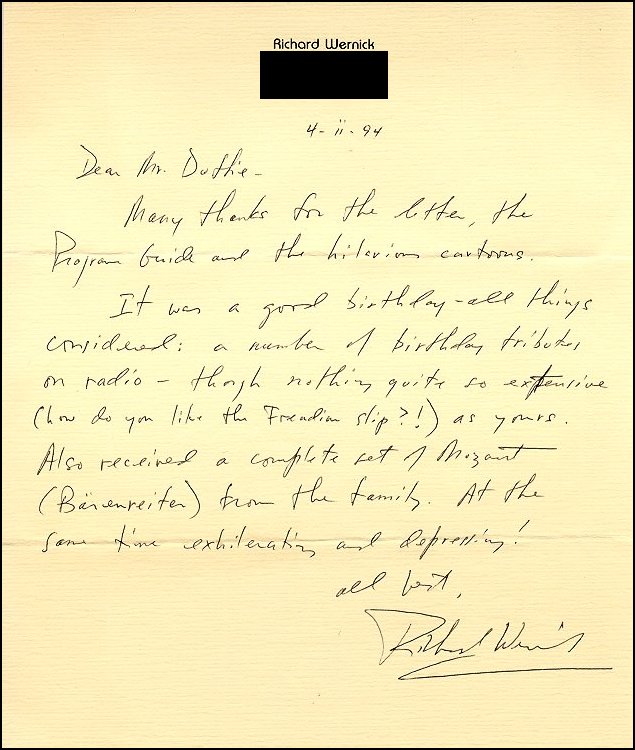
When I did a special program
for his 60th birthday, I sent the composer a
note and a copy of the WNIB Program Guide which listed the event. And, as I often did, I included a few music-related cartoons. Soon thereafter I received this jovial reply . . . . .
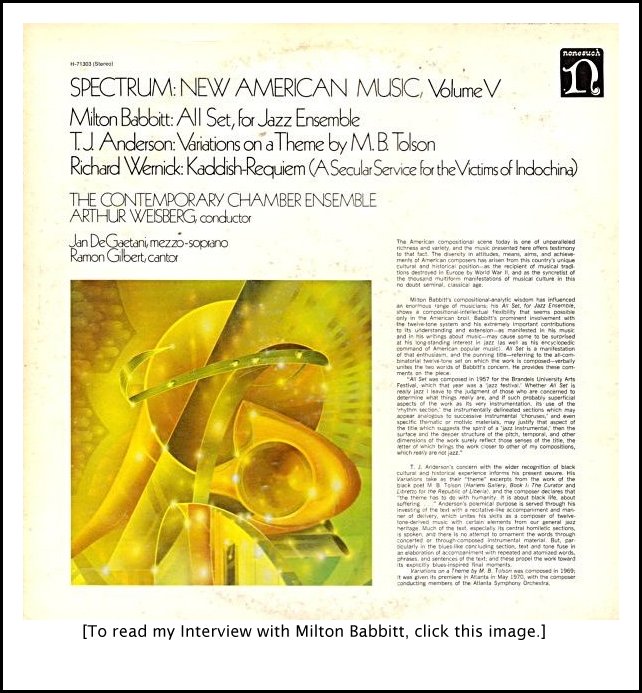
To read my Interview with John Harbison, click HERE. To read my Interviews with Gunther Schuller, click HERE.
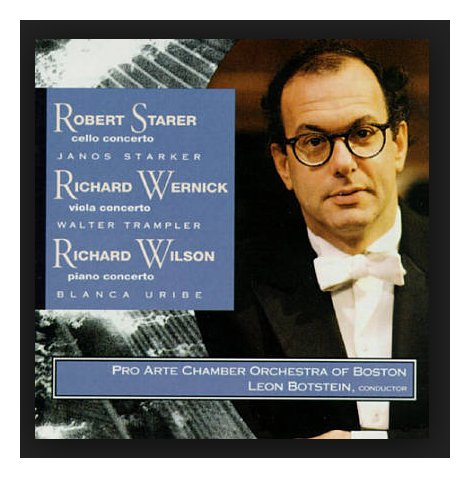
To read my Interview with Robert Starer, click HERE. To read my Interview with Janos Starker, click HERE. To read my Inrterview with Richard Wilson, click HERE.
See my interviews with T.J. Anderson, and Arthur Weisberg
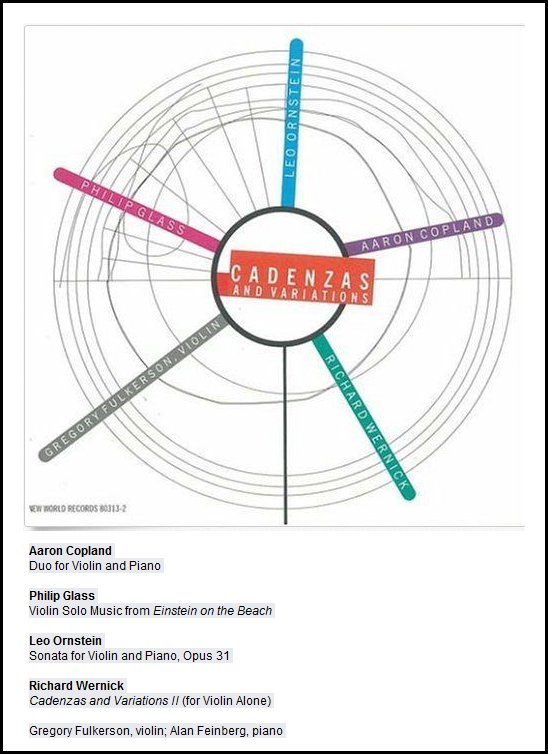
To read my Interviews with Philip Glass, click HERE. To read my Interview with Leo Ornstein, click HERE.
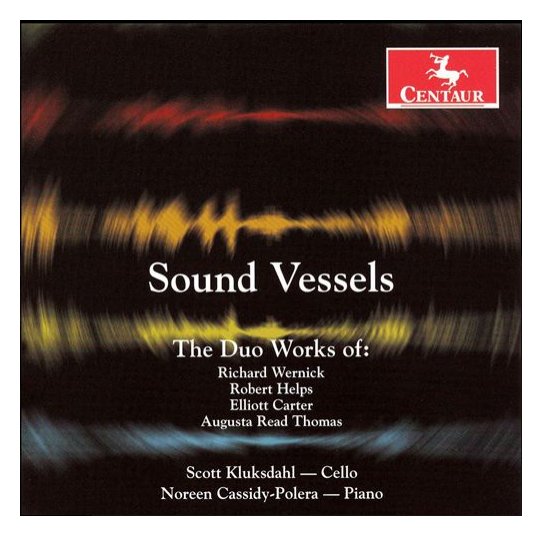
To read my Interview with Robert Helps, click HERE. To read my Interview with Elliott Carter, click HERE. To read my Interview with Augusta Read Thomas, click HERE.
To read my Interview with Stephen Albert, click HERE. To read my Interview with Maurice Wright, click HERE. To read my Interview with Mario Davidovsky, click HERE. To read my Interview with George Crumb, click HERE. To read my Interview with Lucy Shelton, click HERE. To read my Interview with David Gordon, click HERE. |
This interview was recorded on the telephone on December 27, 1993.
Portions were used (along with recordings) on WNIB in 1994 and 1999, and
on WNUR in 2009. The transcription was made and posted on this website
in 2009. More photos and links were added in December of 2015.
To see a full list (with links) of interviews which have been transcribed and posted on this website, click here. To read my thoughts on editing these interviews for print, as well as a few other interesting observations, click here.
Award - winning broadcaster Bruce Duffie was with WNIB, Classical 97 in Chicago from 1975 until its final moment as a classical station in February of 2001. His interviews have also appeared in various magazines and journals since 1980, and he now continues his broadcast series on WNUR-FM, as well as on Contemporary Classical Internet Radio.
You are invited to visit his website for more information about his work, including selected transcripts of other interviews, plus a full list of his guests. He would also like to call your attention to the photos and information about his grandfather, who was a pioneer in the automotive field more than a century ago. You may also send him E-Mail with comments, questions and suggestions.