A Conversation with Bruce Duffie
 WM: Oh, first of
all, you try to write the best
that’s in you in that time to write. If you are doing it
well, in my way of composing, that means eliminating what you don’t
want to say. That doesn’t in any way contradict a
composer who wishes to elaborate on what he says. I think there
are composers who do that, and they do that successfully. But I
think probably there may be more around than there should be who try
and elaborate too much. It’s not difficult to elaborate on
music. I wrote my most complicated music when I was about
seventeen! Since then I’ve been cutting things out in
order to try and get to the center of what has to be said. And I
think that is what we mean by accessibility. But it’s something
which I do out of conviction. I don’t find it basically a
problem. The difficulty is saying not as much as possible, but
perhaps as little as possible, in a way.
WM: Oh, first of
all, you try to write the best
that’s in you in that time to write. If you are doing it
well, in my way of composing, that means eliminating what you don’t
want to say. That doesn’t in any way contradict a
composer who wishes to elaborate on what he says. I think there
are composers who do that, and they do that successfully. But I
think probably there may be more around than there should be who try
and elaborate too much. It’s not difficult to elaborate on
music. I wrote my most complicated music when I was about
seventeen! Since then I’ve been cutting things out in
order to try and get to the center of what has to be said. And I
think that is what we mean by accessibility. But it’s something
which I do out of conviction. I don’t find it basically a
problem. The difficulty is saying not as much as possible, but
perhaps as little as possible, in a way.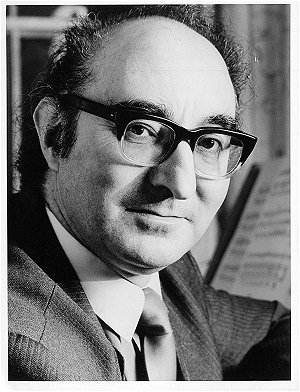 WM: I don’t find it
off-putting at all! I find
it’s much nearer to me than poetry of the nineteenth century, the worst
of which is very often like you get on the back of Christmas cards,
which is sentimentality. I don’t like
sentimentality in music or anything else. I like direct emotion
if one has to use it, and I prefer those words.
WM: I don’t find it
off-putting at all! I find
it’s much nearer to me than poetry of the nineteenth century, the worst
of which is very often like you get on the back of Christmas cards,
which is sentimentality. I don’t like
sentimentality in music or anything else. I like direct emotion
if one has to use it, and I prefer those words.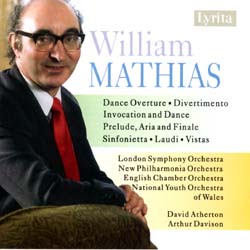 WM: Too close.
Just a bit, and it might be
better to have somebody younger, somebody like Simon Rattle, or David
Atherton, who works in San Diego, to do that work. They place
a little distance from you, and they can, perhaps, tell you a few
things
about it. But my view is that a bad piece has only one way of
doing it, and a good piece has any number of ways of doing it.
You may disagree with that, but I think it’s probably got some
truth. What a composer would have to
say about his music would at least be of some value. I mean,
Elgar was remarkable in lots of ways. I mean, perhaps he wasn’t a
great conductor in the sense that Furtwangler was, but at least when
you listened to him on his own music, and sometimes on music of others,
it’s quite remarkable.
WM: Too close.
Just a bit, and it might be
better to have somebody younger, somebody like Simon Rattle, or David
Atherton, who works in San Diego, to do that work. They place
a little distance from you, and they can, perhaps, tell you a few
things
about it. But my view is that a bad piece has only one way of
doing it, and a good piece has any number of ways of doing it.
You may disagree with that, but I think it’s probably got some
truth. What a composer would have to
say about his music would at least be of some value. I mean,
Elgar was remarkable in lots of ways. I mean, perhaps he wasn’t a
great conductor in the sense that Furtwangler was, but at least when
you listened to him on his own music, and sometimes on music of others,
it’s quite remarkable.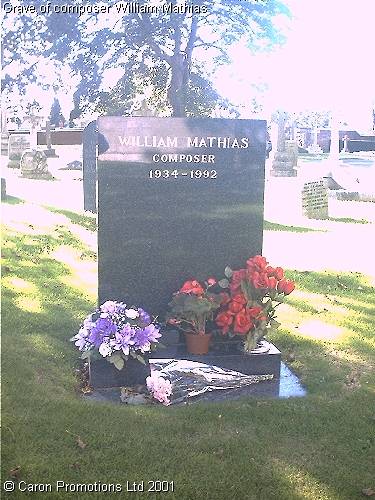 WM: In 1980 they
produced this work. It was a fine production and was seen on
television. I wrote it in the two years previous with Iris
Murdoch. She's a novelist, but this was, in fact, a play of
hers. Her novels would be too complicated to make
into a play, but this work interested me because it was a
curiously modern problem of who was
to be master and who was to be servant, and what the
relationship between the two are. It’s a
kind of allegory set in Central
Europe on the Hungarian-Austrian border about mastery,
servitude, democracy and feudalism. They
all come into this. It can be reflecting in
almost every level of society. It was originally
called The
Servants in the Snow, which I decided was too long a title, and
she
agreed with me!
WM: In 1980 they
produced this work. It was a fine production and was seen on
television. I wrote it in the two years previous with Iris
Murdoch. She's a novelist, but this was, in fact, a play of
hers. Her novels would be too complicated to make
into a play, but this work interested me because it was a
curiously modern problem of who was
to be master and who was to be servant, and what the
relationship between the two are. It’s a
kind of allegory set in Central
Europe on the Hungarian-Austrian border about mastery,
servitude, democracy and feudalism. They
all come into this. It can be reflecting in
almost every level of society. It was originally
called The
Servants in the Snow, which I decided was too long a title, and
she
agreed with me! |
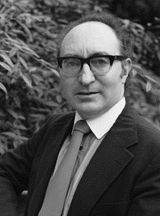
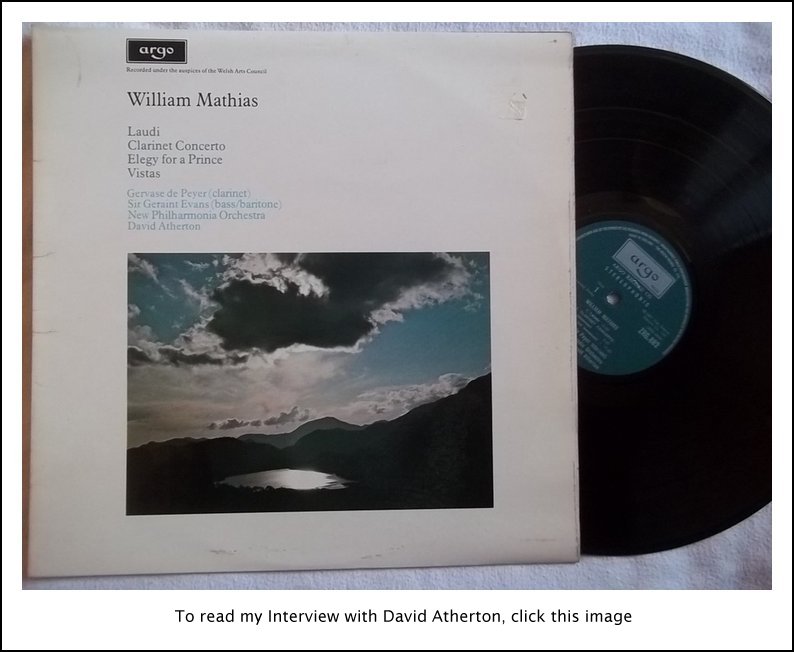
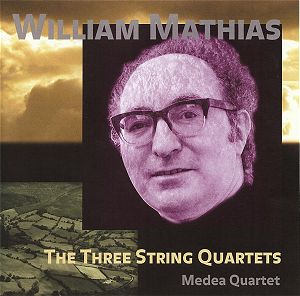
William Mathias was born in Whitland, Dyfed in 1934 and died in 1992. He began to compose at an early age, studying first at the University College of Wales, Aberystwyth, taking his BMus with first-class honours, and subsequently on an Open Scholarship in composition at the Royal Academy of Music. He was elected a Fellow of the Royal Academy of Music in 1965, and gained the DMus of the University of Wales in 1966. In 1968 he was awarded the Bax Society Prize under the Harriet Cohen International Music Awards, and in 1981 the John Edwards Memorial Award. From 1970-1988 he was Professor and Head of the Music Department at the University College of North Wales, Bangor. He was known as a conductor and pianist, and gave or directed many premi�res of his own works. In 1972 he founded the North Wales Music Festival at St Asaph Cathedral and remained its artistic director until his death. A house composer with Oxford University Press since 1961, his compositions cover an extraordinarily wide range. Early success include the Clarinet Sonatina at the 1957 Cheltenham Festival (followed within a year by broadcasts in France and Poland), and the Divertimento for String Orchestra which, following its London premi�re, was quickly taken up as far afield as Prague and California. He has made a highly significant contribution to twentieth-century organ music, and his church music and carols are still regularly performed world-wide. Works such as the Symphonies, Clarinet Concerto, Harp Concerto, Improvisations for harp, Laudi, Piano Concerto No.3, Ave Rex, Riddles and This Worlde's Joie have entered the repertory; the Organ Concerto scored a great success in the 1984 BBC Promenade Concerts, and Lux Aeterna has been hailed as one of the finest British choral/orchestral works this century. Mathias' full-scale opera The Servants (with a libretto by Iris Murdoch) was premiered by Welsh National Opera in 1980. Works composed to celebrate Royal occasions include the Investiture Anniversary Fanfare (for the tenth anniversary of the Investiture of the Prince of Wales), Vivat Regina and A Royal Garland (for the Queen's Silver Jubilee), Let all the World in every corner sing (for the diamond jubilee of the Royal School of Church Music), As truly as God is our Father (for the Friends of St Paul's Cathedral and their Patron, The Queen Mother), and Let the people praise Thee, O God - the anthem especially composed for the wedding of The Prince and Princess of Wales in 1981. His last important compositions included Symphony No.3 (1991) and the Violin Concerto for Gyorgy Pauk (1992). Mathias'
musical language embraced both instrumental and vocal
forms with equal success, and he addressed a large and varied audience
both in Britain
and abroad. In 1987 he was awarded an Honorary DMus by Westminster
Choir College, Princeton. He was made CBE in the 1985 New Year's
Honours. In 1992 Nimbus records
embarked upon a series of recordings of his major works. [Biography from Oxford
University Press] |
This interview was recorded on December 2,
1985. Portions were used (along with recordings) on WNIB the following day, and again
several times in subsequent years; on WNUR
in
2005 and 2007; and also on Contemporary
Classical
Internet Radio
in 2007. A copy of the audio interview was placed in the Archive
of Contemporary Music at Northwestern University. This
transcription was made in 2008 and was posted on this
website that September.
To see a full list (with links) of interviews which have been transcribed and posted on this website, click here.
Award - winning broadcaster Bruce Duffie was with WNIB, Classical 97 in Chicago from 1975 until its final moment as a classical station in February of 2001. His interviews have also appeared in various magazines and journals since 1980, and he now continues his broadcast series on WNUR-FM, as well as on Contemporary Classical Internet Radio.
You are invited to visit his website for more information about his work, including selected transcripts of other interviews, plus a full list of his guests. He would also like to call your attention to the photos and information about his grandfather, who was a pioneer in the automotive field more than a century ago. You may also send him E-Mail with comments, questions and suggestions.